
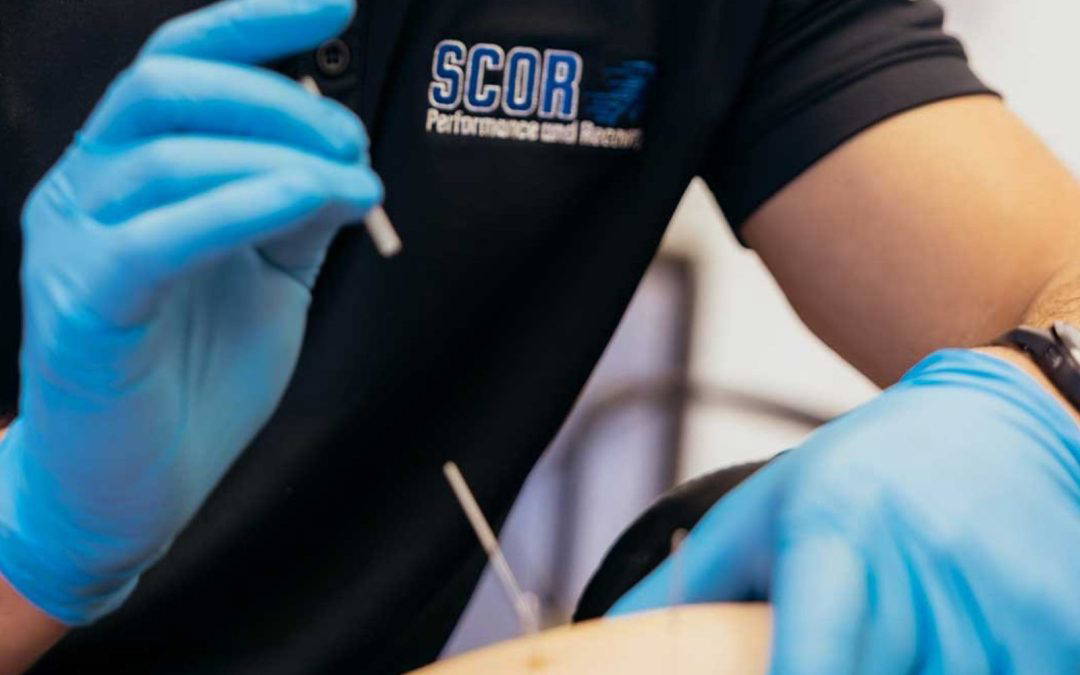
If you've ever seen dry needling and acupuncture, you may have wondered:
“Aren't those basically the same thing?”
It's an understandable question. Both use very thin needles, neither involves injecting medication, and both can be used to help people feel and move better.
While they may look similar, dry needling and acupuncture are different approaches that come from different traditions and are used for different purposes.
Let's break down the difference in a simple way.
Dry Needling vs. Acupuncture: The Basic Difference
Acupuncture is a treatment that comes from the tradition of Traditional Chinese Medicine (TCM). Acupuncture uses specific points on the body that are traditionally associated with meridians and the flow of qi, or energy. Practitioners may use acupuncture to address a wide variety of concerns, and the points selected don't necessarily have to be directly over the area where you feel pain.
Dry needling, on the other hand, is commonly used by physical therapists as part of a musculoskeletal treatment plan. The physical therapist uses their knowledge of anatomy, movement, and the patient's symptoms to identify specific muscles or tissues that may be contributing to the problem.
The needles may be used in areas of muscle tension or sensitivity, including what are commonly referred to as trigger points.
The easiest way to think about it is this:
The needle may look similar, but the clinical approach, assessment, and goals of treatment are different.
Why Is It Called "Dry" Needling?
The word “dry” can sound a little strange at first.
It simply means that nothing is being injected through the needle.
A dry-needling needle is a thin, solid filament. Unlike a hypodermic needle used for an injection, there is no medication being delivered into your body.
The goal is to use the needle as a treatment tool to influence muscle and nervous system function as part of a larger treatment plan.
What Happens During Dry Needling?
When your physical therapist performs dry needling, they'll first evaluate your symptoms and movement to determine whether it's an appropriate treatment option.
Depending on the area being treated, you may feel very little when the needle is inserted.
Once the needle reaches the targeted tissue, you may occasionally experience a brief twitch response. This is an involuntary contraction of the muscle that can feel like a quick jump, tap, or brief cramp.
Not everyone experiences a twitch, and a twitch isn't required for dry needling to be effective.
After treatment, some people notice that a muscle feels less tense or that a particular movement feels easier. Others may notice more gradual changes as they continue with their rehabilitation.
Research suggests that dry needling can influence pain, muscle sensitivity, and movement, but the exact mechanisms behind its effects are still being studied.
That's one reason we don't view dry needling as a “magic fix.”
Instead, it's one tool we can use when it makes sense for the person in front of us.
How Is Acupuncture Different?
Acupuncture is a distinct healthcare profession and treatment approach rooted in Traditional Chinese Medicine.
Acupuncturists receive specialized education and training in acupuncture and may use acupuncture as their primary form of treatment.
The goals and treatment approach can be different from what you would experience with a physical therapist.
For example, an acupuncturist may select points based on the traditional acupuncture framework and the individual's overall presentation.
A physical therapist using dry needling is typically incorporating the technique into a broader physical therapy evaluation and treatment plan focused on things such as:
-
Pain
-
Strength
-
Mobility
-
Muscle function
-
Movement mechanics
-
Exercise tolerance
-
Returning to sport or activity
Neither approach is necessarily “better.” They're simply different approaches.
Do Dry Needling and Acupuncture Overlap?
Yes.
There can be some overlap between the locations where acupuncture needles are placed and the areas targeted during dry needling.
That's part of the reason the two treatments can look so similar.
There is also research exploring the different physiological effects of needling techniques, and scientists continue to learn more about how these treatments influence pain and the nervous system.
Rather than thinking of dry needling and acupuncture as competing treatments, it's more helpful to understand that different healthcare professionals can use similar tools within different treatment frameworks.
Which One Is Right for You?
That depends on what you're looking for.
If you're interested in acupuncture as part of a Traditional Chinese Medicine approach, an acupuncturist may be a great option.
If you're dealing with an orthopedic or sports-related problem and want needling incorporated into a larger rehabilitation program, dry needling with a physical therapist may be a good fit.
For example, an athlete dealing with shoulder pain might benefit from dry needling as one part of treatment, but they'll likely also need strength training, mobility work, movement retraining, and a gradual return to their sport.
That's where the combination of treatment techniques becomes important.
How We Use Dry Needling at SCOR
At SCOR Performance and Recovery, dry needling is a tool and not the entire treatment.
We don't use dry needling simply because you have pain or because it's something we offer.
First, we want to understand why you're having the problem in the first place.
If dry needling can help reduce symptoms, improve movement, or make it easier for you to perform your exercises, we'll consider using it.
But then we build on that improvement.
That might mean:
-
Strengthening a weak muscle
-
Improving mobility
-
Changing how you're moving
-
Gradually increasing your training load
-
Building better movement control
-
Returning you to running, lifting, or your sport
The goal is to help you do more than simply feel better for a few hours.
We want to help you build the strength, capacity, and confidence to get back to doing what you love.
The Bottom Line
Dry needling and acupuncture may look similar, but they're used within different treatment approaches.
Acupuncture is rooted in Traditional Chinese Medicine, while physical therapists commonly use dry needling as part of a modern musculoskeletal rehabilitation approach.
At SCOR, dry needling is simply one of the many tools in our toolbox.
If you're dealing with a nagging injury, pain that's limiting your workouts, or a movement that doesn't feel quite right, we'll help determine what's actually contributing to the problem and create a treatment plan designed around your goals.
You don't need to know whether you need dry needling before you come in.
That's our job.
Book a dry needling session or call (234) 380-6182. SCOR Performance & Recovery, 4968 Darrow Rd., Stow, OH.
Related: Dry Needling in Stow, Ohio · Does dry needling hurt?